Singapore, city, capital of the Republic of Singapore. The town, as soon as a distinct entity, so got here to dominate the island that the Republic of Singapore essentially became a metropolis-state. According to Malay tradition, the island was visited by a prince who came from the Sumatran empire of Śrivijaya and founded and named the city of Singapura. Portuguese records also have it that the town was founded by a Śrivijayan prince from Palembang. The National University of Singapore (read this post here) was founded in 1980 by the merger of the University of Singapore and Nanyang University. The Nanyang Technological Institute was established in the previous Nanyang University in 1981. Tiger Balm Gardens is a collection of statuary depicting Chinese myths and legends. The international airport at Changi (opened in 1981) was developed on reclaimed land to the northeast. Jurong is a large industrial estate and port west of the town. Other attractions embrace the Jurong Bird Park (opened 1971). Its 50 acres (20 hectares)-perhaps the biggest park of its kind on the planet-home some 600 species of birds.

 The government maintains a national museum, library, and theatre and the Van Kleef Aquarium. After 1963 the administration of the town and rural areas was handled by the central authorities. Created a city by royal charter in 1951, Singapore was administered as a municipality by an elected mayor-council government from 1957 until 1959, when the colony turned self-governing. Within town run the Singapore and Rochor rivers, which are tidal inlets crowded with native craft. The Singapore Botanic Gardens are to the northwest. It occupies the southern part of Singapore Island. Sentosa Island in Singapore Harbour has been developed as a major recreational area; it is related by cable car with Mount Faber and can also be accessible by ferry, offering visitors with beaches, a golf course, and an amusement park. Keppel is Southeast Asia’s major transshipment point for exports of oil, rubber, plywood, lumber, and spices. The Keppel wharves, which lie protected between the islands of Brani and Sentosa, are deepwater and include main docks and warehouses. In the next section, we’ll look at how all of those cheeses are made.
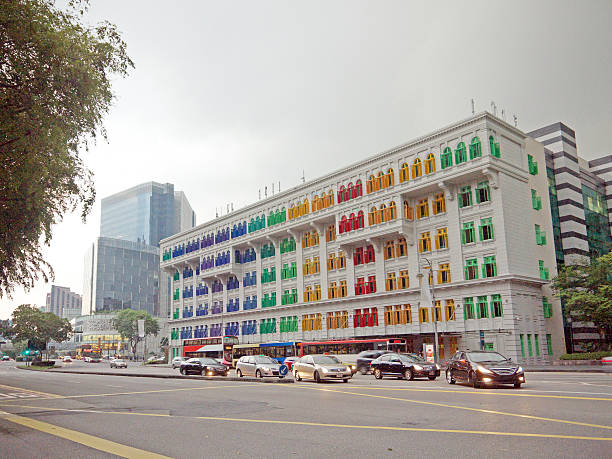 Parmigiano-Reggiano, Gruyère and Emmental are all cooked, pressed cheeses. Cheeses with holes are made with bacteria that eat lactic acid and give off bubbles of carbon dioxide. Many cheeses are recurrently washed, brushed and turned whereas ripening. If the salt has not already been added to the curds, the cheese can be rubbed or washed with salt, or even floated in a briny “bath.” All of those strategies have an effect on the flavor of the cheese in other ways — cheeses like Parmigiano-Reggiano get a salt rub while washed-rind cheeses are washed with brine or other liquids. While predominantly Chinese, it has substantial minorities of Malays and Indians. The east lagoon is the regional centre for container transshipments. Its trendy history began with the arrival of Stamford Raffles of the British East India Company, who, in looking for a trading site, landed there on January 29, 1819. The port’s progress was steady, and the opening of the Suez Canal in 1869 and the advent of steamships increased its importance as a bunkering station. Along the way, there are lots of different things that cheesemakers can do to alter the taste and appearance of the cheese.